
Sydney region · 5 suburbs
Emergency Plumber Western Sydney
Clay soil and growing city centres
Parramatta to Penrith, with Blacktown, Liverpool and Bankstown between. Clay soil that moves with the weather cracks buried pipes, and the city centres add high-rise strata work.
- ~75 min average response
- 5 suburbs covered
- NSW Fair Trading licensed plumbers
- Standard rate 24/7 for emergencies
- Licensed local plumbers
- Direct contact
- 24/7
- Free quotes
Free Western Sydney quote
Emergency plumber in Western Sydney: the short answer
Need an emergency plumber in Western Sydney? Our licensed local plumbers cover Parramatta, Blacktown, Penrith, Liverpool, Bankstown and the suburbs between, 24 hours a day, and usually arrive in about 75 minutes. Most call-outs here are sewer pipes cracked by clay soil, leaks under concrete slabs and burst hoses in the new apartment towers. Emergency work is typically $120-160 an hour, quoted before we start.
Updated 7 October 2026
- Typical arrival
- About 75 minutes
- Emergency rate
- $120-160 an hour, at any hour
- Typical homes
- Post-war fibro and brick houses, brick veneer on concrete slabs from the 1970s on, apartment towers in the city centres
- Most common emergencies
- Cracked sewer pipes, leaks under slabs, leaks between units in towers
- Water and sewer
- Sydney Water — faults 13 20 90
- Gas network
- Jemena — emergencies 131 909
- Councils
- Parramatta, Blacktown, Penrith, Liverpool and Canterbury-Bankstown
About the Western Sydney
Why Western Sydney plumbing has its own playbook
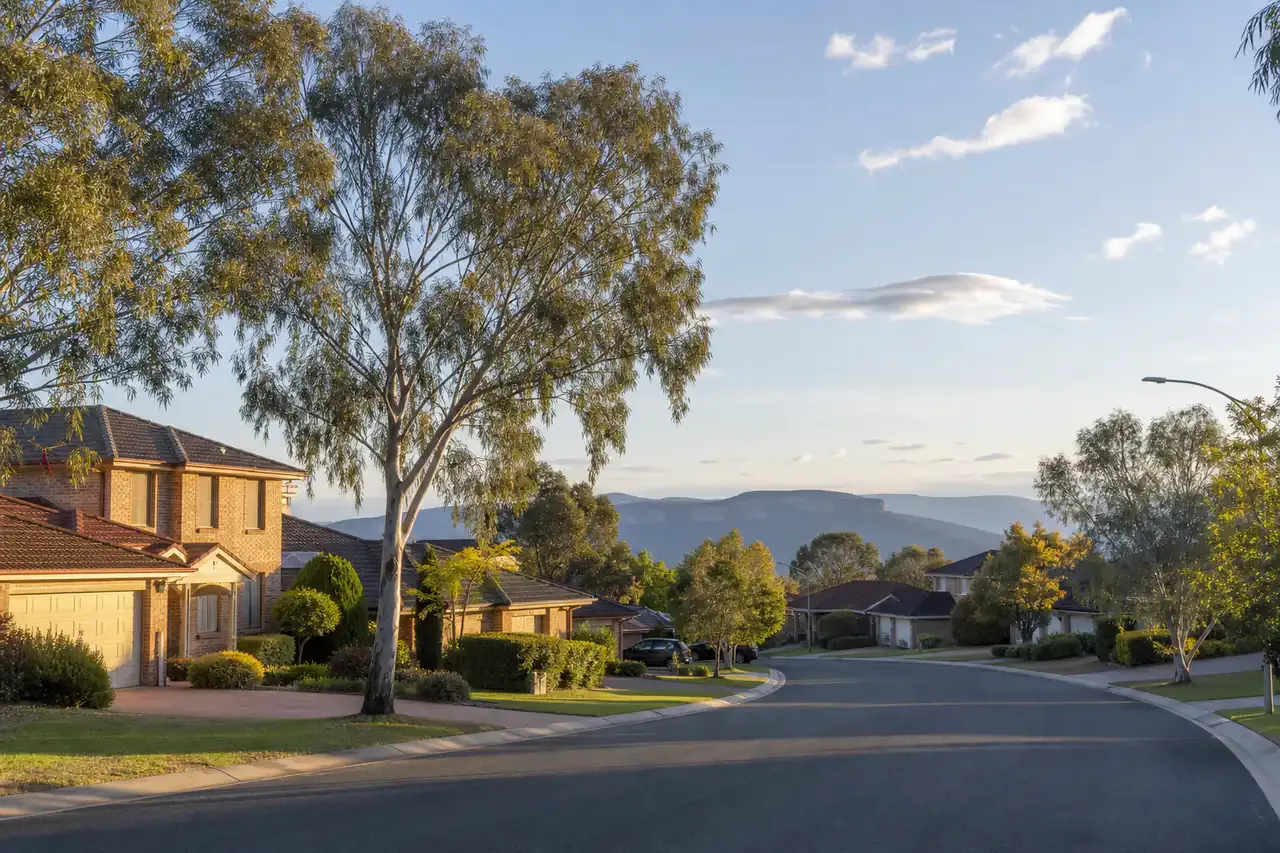
Detached houses on clay across most of the region, from post-war fibro and brick to brick veneer on concrete slabs, with apartment towers rising in Parramatta, Liverpool, Blacktown and Bankstown.
Plumbing problems in the Western Sydney follow the region's housing and its ground. The same kinds of homes and the same local conditions repeat from one postcode to the next, so a plumber who works here knows what to expect before a wall is opened.
The 5 suburbs we list as core coverage — Parramatta, Blacktown, Penrith, Liverpool, Bankstown — are covered by local plumbers. Surrounding postcodes are also covered; tell us your suburb on the quote form and we'll give you a real ETA.
What we see most
Common Western Sydney plumbing patterns
Four problems account for most plumbing emergencies across the Western Sydney. Each comes from the kind of homes built here and the ground they stand on.
- 1
Cracked sewer pipes from clay soil that swells and shrinks
- 2
Leaks in pipes under concrete slabs
- 3
Leaks between units in apartment towers
- 4
Ageing pipes and hot water units in houses from the 1950s to the 1990s
Why Western Sydney plumbing fails the way it does
Most of Western Sydney sits on clay, and clay moves. It swells when it is wet and shrinks when it dries, and anything buried in it moves too. After a wet year the ground heaves; after a hot, dry summer it cracks and drops. Pipes laid in it are strained every time, and the joints of a sewer line are where they give. Tree roots then follow the water.
The houses add their own patterns. Post-war fibro and brick homes from the 1950s and 60s still have galvanised steel water pipes that rust from the inside. Brick veneer houses from the 1970s onward sit on concrete slabs, with pipes under or through the slab that leak where the ground has moved. And the city centres, Parramatta above all, have filled with apartment towers in the past decade, where a burst hose on one floor is a flood on the next.
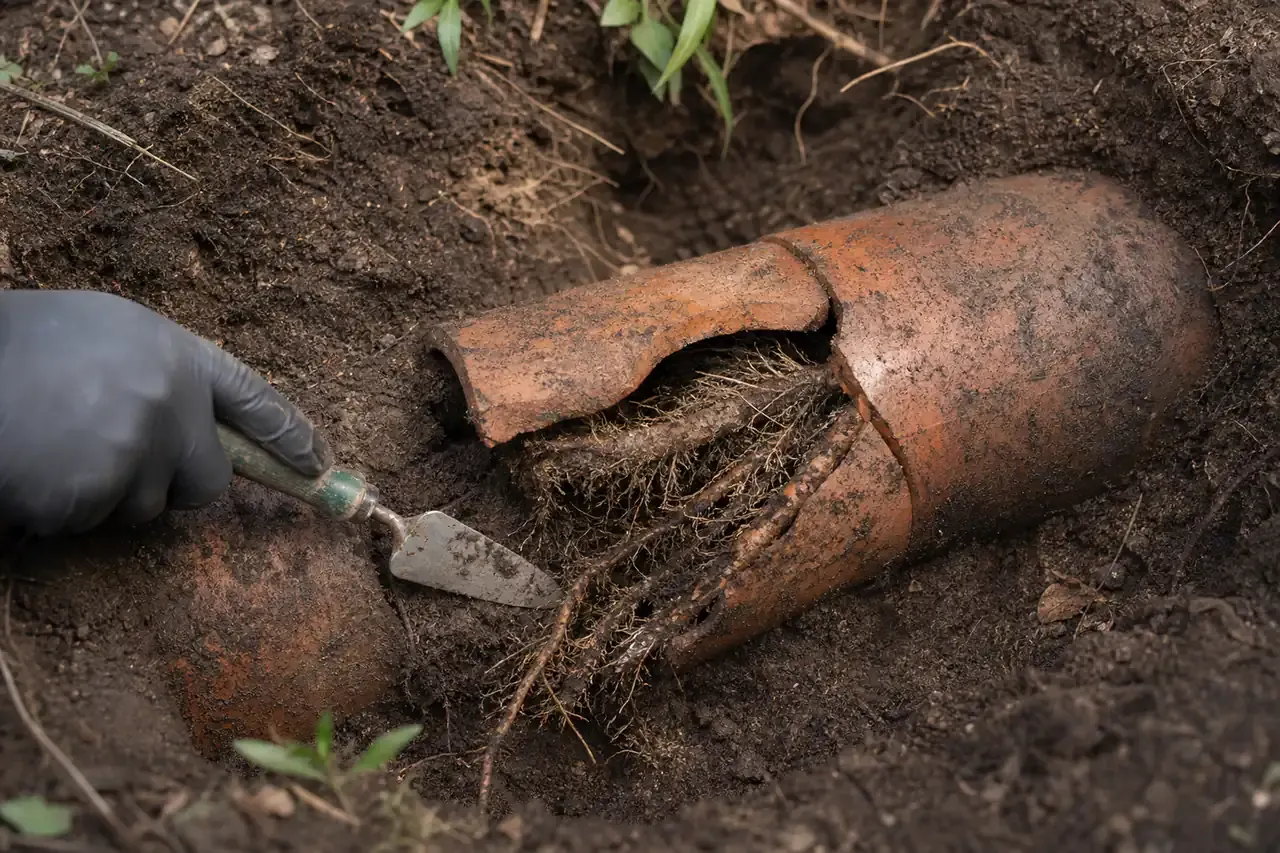
The emergencies we are called to most in Western Sydney
- Sewage backing up in the yard or the bathroom. Usually a cracked clay or PVC sewer line with roots in it. Stop running water and check whether the neighbours are affected too.
- A warm or damp patch on the floor, or a water bill that has jumped. Signs of a leak under the slab. Read the water meter with every tap off; if it is moving, water is escaping.
- Water coming through from the unit above. In the towers of Parramatta, Liverpool, Blacktown and Bankstown. Turn off your own water and ring the building manager.
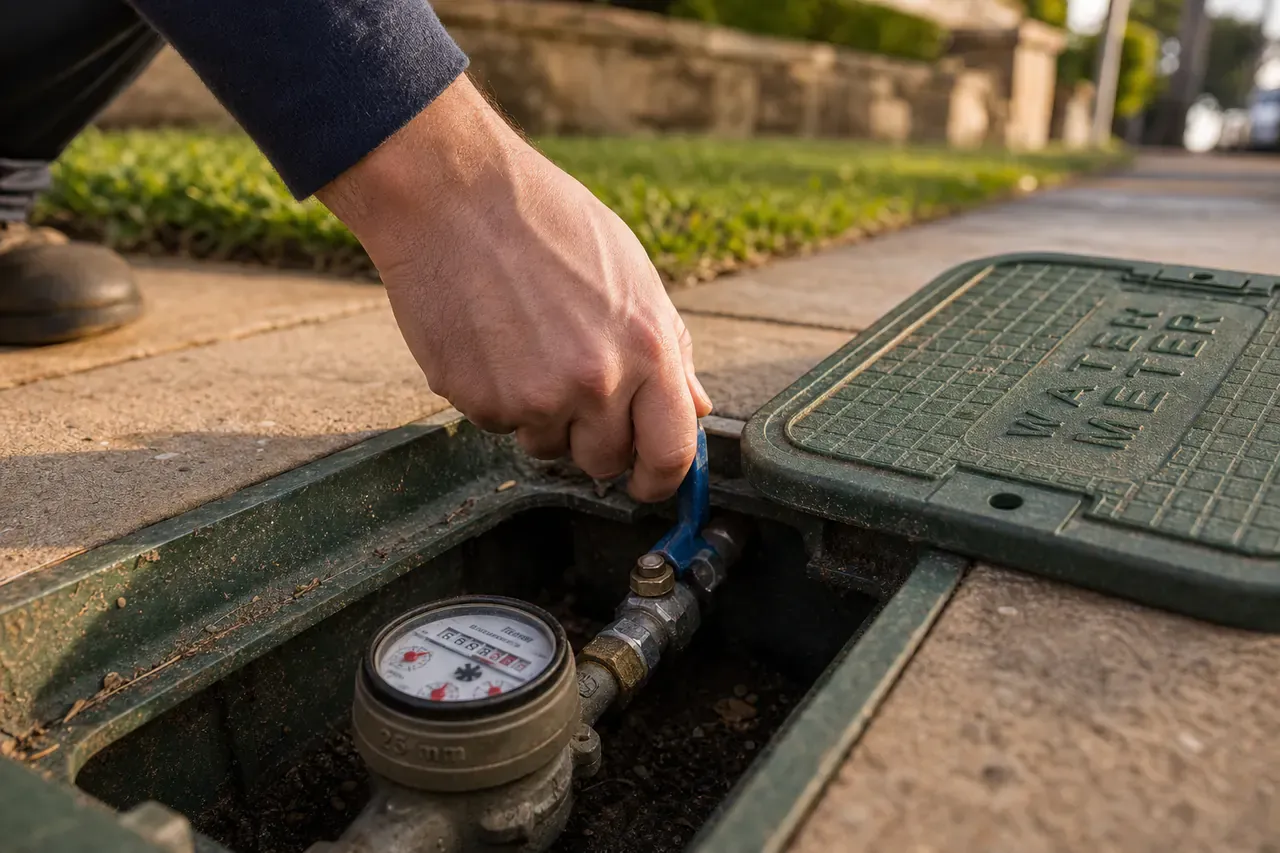
- Burst galvanised pipe in an older house. Turn the water off at the meter, usually in a box at the front boundary.
- Stormwater or flooding near the rivers. Low ground near the Parramatta, Georges and Nepean rivers floods in major rain events. Keep grates clear and test the sump pump before the wet season.
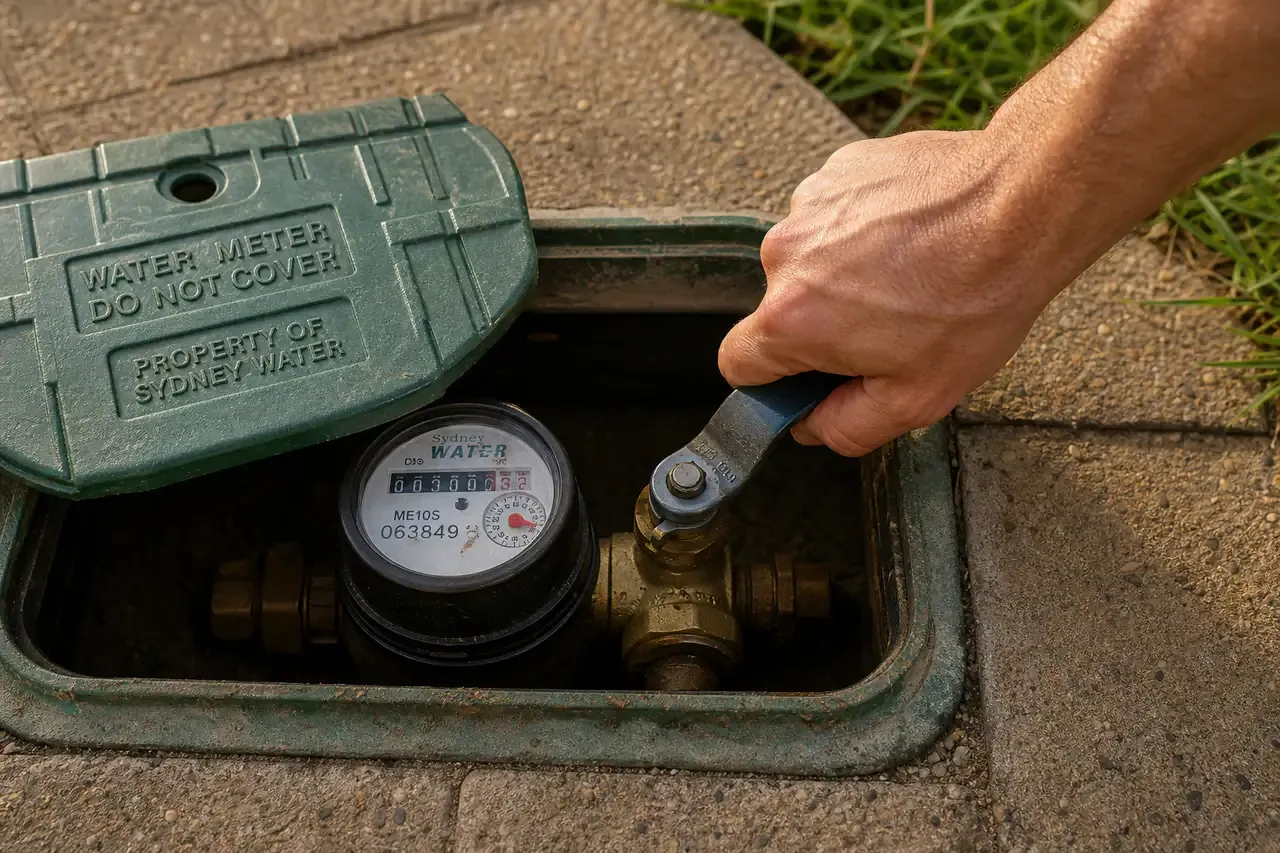
Leaks under the slab
A slab leak is a leak in a pipe that runs under or through the concrete floor of a house. On clay soil it is one of the most common hidden faults in Western Sydney, because the slab and the ground beneath it do not move together. The signs are quiet: a patch of floor that is warm or damp, the sound of water running when everything is off, a water bill that has gone up, a hot water system that seems to run all day.
You can confirm there is a leak yourself. Turn off every tap and appliance, read the water meter, use no water for at least an hour and read it again. If the numbers have moved, water is going somewhere. Finding exactly where takes detection equipment, and that happens before any concrete is cut. Often the better repair is to run a new pipe around the slab, through the walls or ceiling, rather than to dig through it.
Towers in Parramatta, Liverpool, Blacktown and Bankstown
The city centres of Western Sydney now hold tens of thousands of apartments, most of them less than fifteen years old. The plumbing in them is modern but shared: pumps and pressure valves serve the whole building, waste from many units runs down common pipes, and very little can be turned off without the building manager. As a general rule in NSW, pipes in shared walls and floors belong to the owners corporation and the fittings inside your unit are yours.
The most common emergency in a tower is a burst flexible hose under a sink or behind a toilet. If the hoses in your apartment are original and the building is more than ten years old, replacing them is cheap insurance. Know where your own shut-off tap is, usually in the laundry or a bathroom cupboard, and tell us the building name and how to get in when you call.
What an emergency plumber costs in Western Sydney
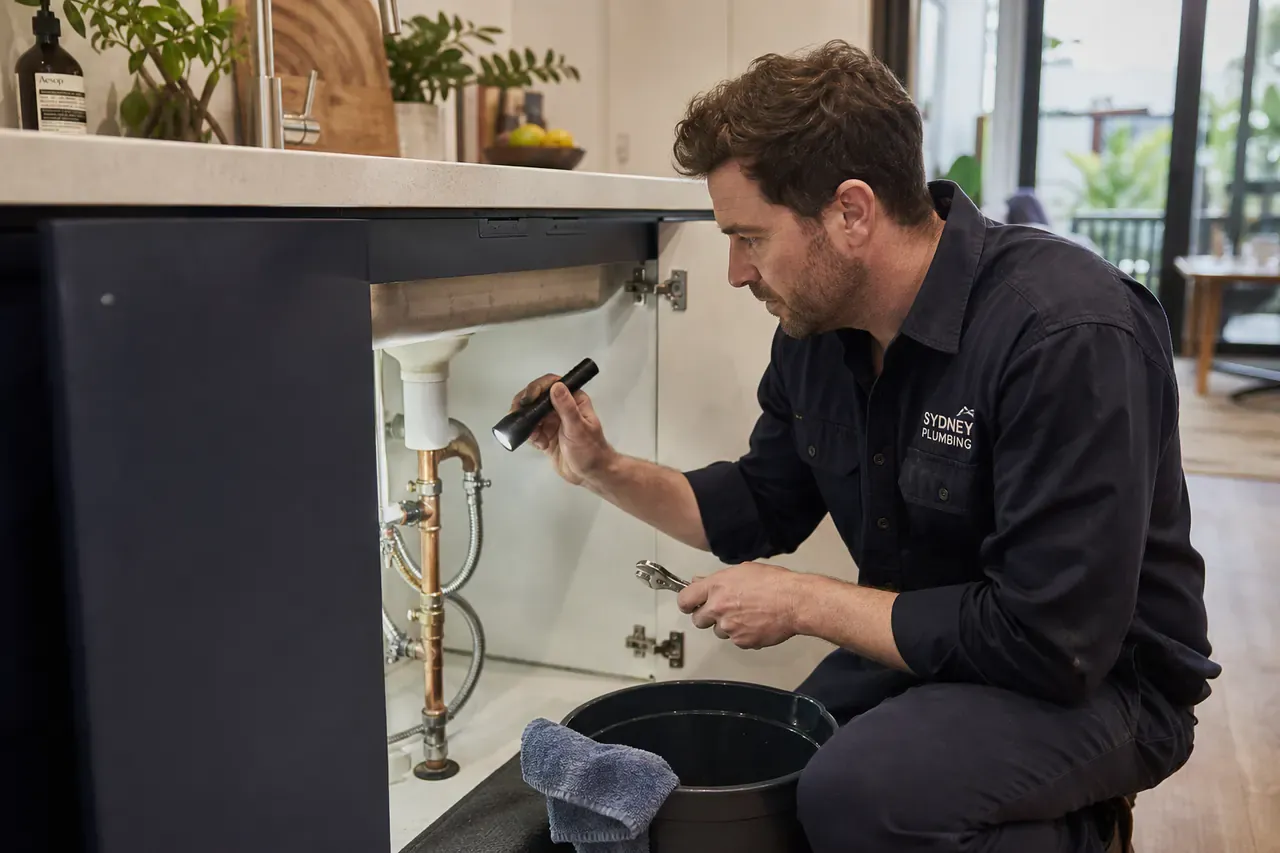
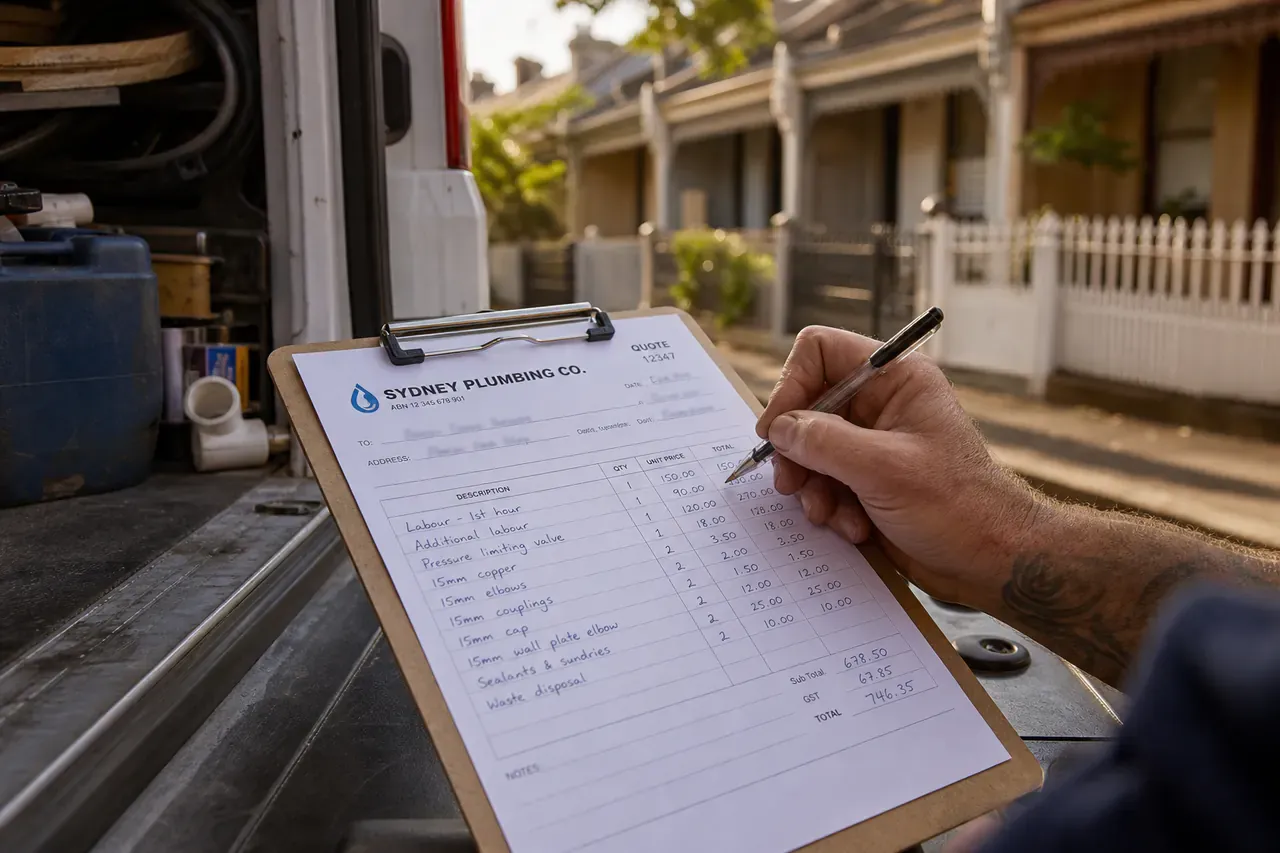
Prices in Western Sydney are the same as anywhere else we work in Sydney: $120-160 an hour for emergency work at any hour, with no separate call-out fee. Distance affects arrival times out toward Penrith, but not the price. What moves the bill here is what is found under the ground: a slab leak or a collapsed sewer line is a bigger job than a burst hose, and a drain camera before any digging keeps the work to what is actually needed.
- Blocked drain clearance$150-400
- Tree root cutting$400-800
- Hidden leak detection and repair$350-800
- Slab leak detection and repair$1,500-4,500
- Burst pipe repair (visible pipe)$200-450
- Flexi-hose replacement$180-280
2026 reference ranges. Full price list and price estimator →
Emergency plumber Western Sydney: suburb by suburb
Emergency plumber Parramatta
Apartment towers in the centre, older houses and flats around it, the river through the middle.
Emergency plumber Blacktown
Post-war fibro and brick houses on clay, apartments near the station.
Emergency plumber Penrith
Houses from the 1950s to the 1980s beside the Nepean River, at the foot of the mountains.
Emergency plumber Liverpool
A high-rise centre and hospital precinct, post-war houses around it, the Georges River alongside.
Emergency plumber Bankstown
Post-war houses and walk-up flats, new towers around the station, clay soil throughout.
Auburn, Granville and Merrylands
Older houses and flats between Parramatta and Bankstown, many now being replaced by apartments.
Westmead and Wentworthville
The hospital precinct and older houses west of Parramatta, with new apartments near the stations.
Campbelltown and the south-west
Also covered; tell us your suburb and we will be honest about the arrival time.
Official sources: Sydney Water (water hardness and quality) · NSW SES (flood and storm help, 132 500) .
Where we cover
Western Sydney suburbs we serve
Tap a suburb below for the local plumbing context — common issues, response times, and the failure patterns particular to that postcode.
Parramatta
2150Pop. 30,211 · leaks between units in high-rise apartment towers
Parramatta guideBlacktown
2148Pop. 50,961 · cracked sewer pipes from clay soil that swells and shrinks with the weather
Blacktown guidePenrith
2750Pop. 17,966 · cracked sewer pipes from reactive clay soil
Penrith guideLiverpool
2170Pop. 31,078 · cracked sewer pipes from clay soil that moves with the weather
Liverpool guideBankstown
2200Pop. 34,933 · cracked sewer pipes from clay soil that swells and shrinks with the weather
Bankstown guideServices across the Western Sydney
Pick what's gone wrong
Emergency Plumber Sydney
Licensed local Sydney emergency plumbers — burst pipes, blocked drains, hot water failures, gas leaks. Free quote in 60 seconds, plumber at your door in under an hour.
View serviceBurst Pipe Repair Sydney
Copper, PEX, polybutylene, slab leaks — licensed local plumbers with leak-isolation gear and the right fittings on every van. On-site in under an hour.
View service24 Hour Emergency Plumber Sydney
Same emergency rate, day or night, weekends or public holidays. Licensed local plumbers on call across Sydney, with no after-hours surcharge for a genuine emergency.
View serviceBlocked Drain Emergency Sydney
Sewer backups, blocked toilets, slow drains across the whole house — licensed local drain plumbers with CCTV, electric eel and hydro-jet on board. Most blockages cleared inside 90 minutes.
View serviceGas Leak Emergency Sydney
Smell gas? Don't ring around — every minute matters. Licensed local gasfitters respond first, isolate the supply, then repair and certify. NSW gasfitting work requires a separate licence — the gasfitter we send holds it.
View serviceGas Plumber Sydney
Licensed gas fitting across every Sydney suburb — appliance connections, new gas lines, hot water conversions, safety inspections. NSW gasfitting is a separate licence to plumbing, and every gas plumber we send holds both.
View serviceEmergency Hot Water Repair Sydney
No hot water? Local Sydney plumbers carrying common Rheem and Rinnai parts — same-day repair on most systems, like-for-like replacement within 24 hours when needed.
View serviceEmergency Toilet Repair Sydney
Overflowing pans, cracked cisterns, blocked S-bends, leaking seals — licensed local plumbers with Caroma parts on the van. Most repairs completed in 30-60 minutes.
View serviceBathroom Plumber Sydney
Leaking showers, dripping taps, running toilets, blocked basins and water coming through the ceiling below. Licensed local plumbers for bathroom repairs across Sydney, any hour for emergencies.
View servicePlumbing Repairs Sydney
Leaking taps and pipes, running toilets, blocked drains, hot water faults and low water pressure. Licensed local plumbers across Sydney, with a written quote before the work starts.
View serviceFirst five minutes
What to Do Right Now, Before the Plumber Arrives
Pick what is happening. These are the safe first steps to take in the next five minutes, before the plumber arrives.
Burst or leaking pipe: what to do now
Stop the water first, then deal with the mess.
- Turn the water off at the meter. It is usually in a box near your front boundary. Turn the tap clockwise, or turn the lever a quarter-turn so it sits across the pipe. In a unit, look for the isolation tap under the kitchen sink, in the laundry or in the bathroom.
- Keep water away from electricity. If water is near power points, lights or appliances, switch the power off at the switchboard — but only if you can reach it without standing in water.
- Drain what is left in the pipes. Open a cold tap at the lowest point of the house (a garden tap is ideal) and turn the hot water system off.
- Limit the damage. Put buckets and towels under the leak, move furniture and valuables, and take photos for your insurer.
Don't use electrical appliances in a wet room, and don't turn the water back on to test it.
Smell of gas: what to do now
Get out first. Make every call from outside.
- Don't touch anything electrical. No light switches, exhaust fans or appliances, and no flames or cigarettes. A single spark can ignite gas.
- Turn the gas off at the meter if you can reach it safely. The gas is off when the handle sits across the pipe.
- Open doors and windows and get everyone outside. Pets too. Stay out until you are told it is safe.
- From outside, ring Jemena on 131 909. That is the gas network's 24/7 faults and emergencies line for Sydney. If anyone feels unwell or there is a fire, ring 000. Ring Jemena: 131 909
- Then call a licensed gasfitter. The network crew makes the supply safe. Finding and repairing a leak on your side of the meter is a gasfitter's job.
Don't go back inside to look for the leak, and don't relight pilot lights yourself.
Sewage or drains backing up: what to do now
Every litre you send down the drain comes back up.
- Stop running water. No flushing, taps, showers, washing machine or dishwasher until the blockage is cleared.
- Keep people and pets away. Sewage is a health hazard. Wear gloves and wash well if you have to touch anything.
- Check the overflow gully outside. It is the grated drain against the wall near the laundry or kitchen. Clear pot plants and leaves off it, so any overflow happens outside and not through your floor drains.
- Ask next door. If the neighbours have the same problem, or sewage is coming up in the street, the blockage may be in the Sydney Water main. Report it on 13 20 90. Ring Sydney Water: 13 20 90
Don't pour chemical drain cleaner into a blocked drain. It rarely clears a sewer blockage, and it is dangerous for whoever opens the pipe next.
No hot water or leaking tank: what to do now
A leaking tank is urgent. A cold shower can usually be fixed the same day.
- Leaking tank? Turn off its water supply. Close the tap on the cold-water pipe going into the unit.
- Turn off its power or gas. Electric: switch off the hot water circuit at the switchboard. Gas: close the gas tap on the pipe to the unit.
- No leak, just cold? Electric: check whether the hot water breaker has tripped. Gas: check that your other gas appliances work and whether the pilot light is out — relight it only by following the instructions printed on the unit.
- Read the label. Note the brand, model and size printed on the tank. It lets us quote a repair or a replacement before we arrive.
Don't block or cap the relief valve that drips from the side of the tank. It is a safety device.
Overflowing or blocked toilet: what to do now
Stop the water going in before you do anything else.
- Turn off the tap behind the toilet. It is the small tap on the wall or floor beside the cistern. Turn it clockwise.
- Don't flush again. If the bowl is still filling, lift the cistern lid and push the rubber flapper down, or lift the float.
- Mop up straight away. In a unit, tell the building manager if water may reach the apartment below.
- Check the other drains. If the shower or floor drain gurgles or backs up as well, the blockage is in the sewer line — follow the sewage steps.
Don't keep plunging once water reaches the rim, and don't use chemical cleaners.
General guidance only. If anyone is in danger, ring 000.
Western Sydney FAQs
Plumbing in the Western Sydney — what people ask
Do you have an emergency plumber in Western Sydney at night and on weekends?
Yes. Our plumbers take emergency jobs across Western Sydney 24 hours a day, every day of the year, at the same $120-160 an hour that applies during the day.How do I know if I have a leak under the slab?
Look for a warm or damp patch on the floor, the sound of running water when everything is off, a water bill that has risen, or a hot water system that seems to run constantly. Then do the meter test: turn off every tap, read the meter, use no water for at least an hour and read it again. If it has moved, you have a leak.Why does my sewer line keep blocking?
On clay soil, usually because the pipe has cracked at a joint as the ground moved, and tree roots have grown in. Clearing the roots works for a while. A camera inspection shows where the damage is, so the section can be relined or replaced instead of cleared again every few months.Is the water in Western Sydney hard?
No. Sydney Water reports that Greater Sydney's drinking water has about 57 milligrams of calcium carbonate per litre, which counts as soft. Hot water units here fail for the same reasons they do elsewhere: age, sediment in the tank and, on clay, pipes strained by ground movement.How fast can a plumber actually reach the Western Sydney?
Average door-to-door across the Western Sydney is around 75 minutes. Our plumbers are based in the region, which keeps travel times tight even during peak traffic. Late-night calls are typically faster — there's no traffic to fight.What are the most common Western Sydney plumbing problems?
Cracked sewer pipes from clay soil that swells and shrinks sits at the top of the list, followed closely by leaks in pipes under concrete slabs. The pattern reflects the region's housing stock and local conditions — see the issues breakdown above for the full list of fault patterns we see weekly.Which Western Sydney suburbs do you cover?
All of them. Our coverage list for the Western Sydney includes Parramatta, Blacktown, Penrith, Liverpool, Bankstown and surrounding postcodes. If you're at the very edge of the metro footprint, drop us a line — we'll be honest about response times before dispatch.Are your Western Sydney prices the same as elsewhere in Sydney?
Yes. Standard emergency rate (AUD 120-160/hr) for genuine emergencies anywhere we cover, including all Western Sydney suburbs. The after-hours premium ($180-300/hr) only applies to non-urgent work specifically booked outside business hours for convenience. No suburb-based price loading.Are the plumbers licensed and insured for work across the Western Sydney?
Every plumber we send in the Western Sydney holds a current NSW Fair Trading licence (verifiable at fairtrading.nsw.gov.au) plus a separate gasfitter's licence where applicable. The plumber who attends carries their own public liability insurance — licence number and certificate of currency are available from them on request.
What we bring to the Western Sydney
Why local plumbers work for Western Sydney householders
Parts for Western Sydney fault patterns
Plumbers based in the Western Sydney typically carry the parts most likely to be needed locally — Caroma cistern internals, common Rheem and Rinnai elements and thermostats, copper fittings in the sizes typical to local pipework, PEX sections for re-pipe work, and gas regulators common in this region — so most call-outs finish on the first visit.
Local knowledge
A plumber based in the Western Sydney knows the street network, the typical traffic patterns, and the access quirks of local apartment buildings and heritage streetscapes. ETAs reflect real travel times, not optimistic estimates, and the plumber updates you by text if anything changes the arrival window.
Same standard rate, any Western Sydney call
Whether your call comes from the leafy heart of Parramatta or the outer edge of the Western Sydney, the standard emergency rate applies. No suburb-based price loading. No "your area's harder to reach" surcharges. Same rate any hour of any day for genuine emergencies.
Insurance documentation on request
Ask the plumber for photos before and after, an itemised invoice with their NSW Fair Trading licence number, and a written likely-cause statement. That is the documentation NSW insurers typically ask for — particularly important for the strata buildings and heritage stock common across the Western Sydney.
Need a Western Sydney plumber now?
Get a free Western Sydney quote in 60 seconds.
Licensed local plumbers serving the Western Sydney 24/7. Same standard rate any hour for genuine emergencies.
Prefer to talk? Call 0468 022 662 — 24/7