
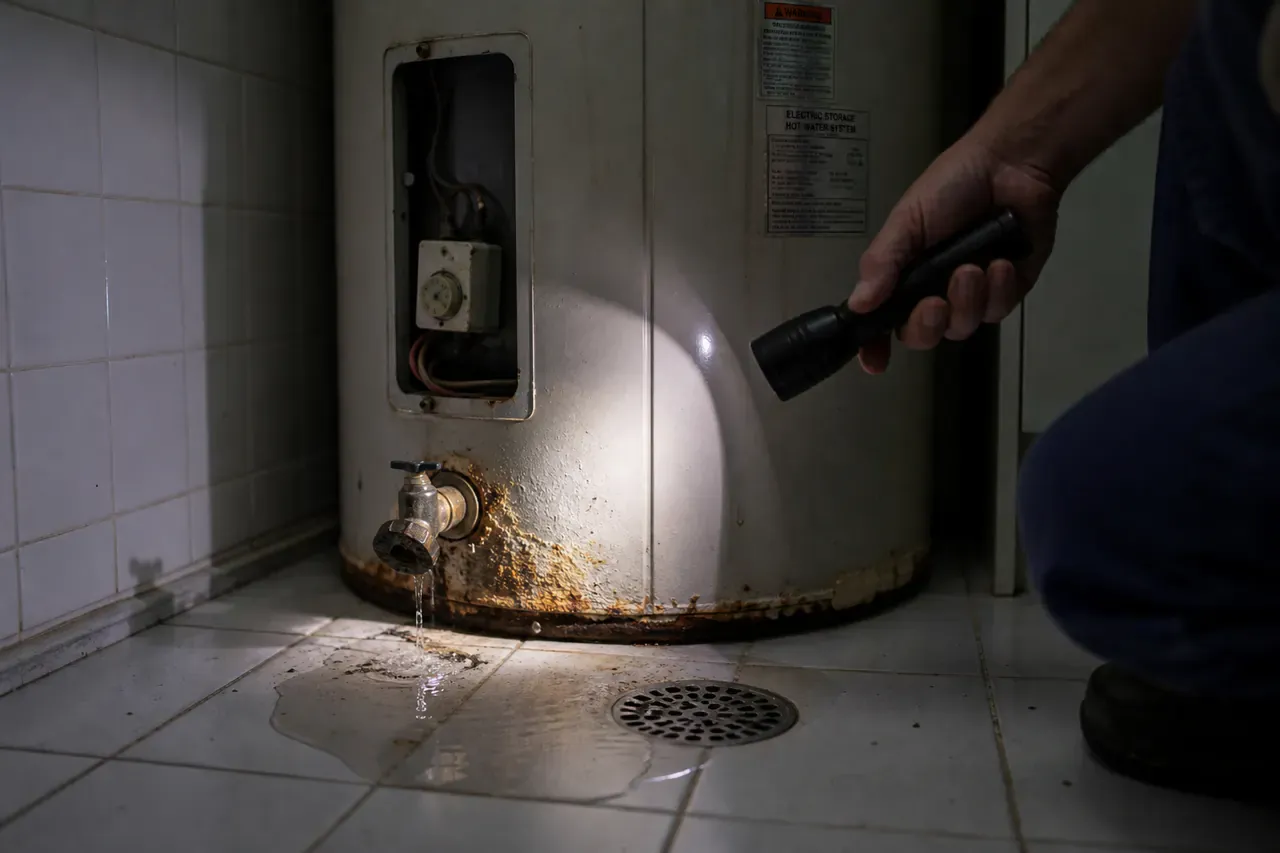
The cold tap runs hard. The hot one beside it manages a trickle. It is one of the most common hot water complaints in Sydney homes, and it has a short list of causes, most of which a plumber can pin down in a few minutes.
Before you call anyone, two questions narrow it down.
Is it the hot only, or both? If the cold is weak as well, the problem is the supply to the whole house, not the hot water. Our guide to low water pressure covers that.
Is it one tap, or every hot tap? One tap means the fault is at that tap. Every tap means it is at the hot water unit or in the pipes leaving it.
1. A blocked aerator, cartridge or shower head
One tap only. The mesh aerator on the end of a spout, the cartridge inside a mixer and the holes in a shower head all catch grit and scale. Unscrew the aerator, rinse it and try again. If the flow comes back, that was it. A blocked mixer cartridge is replaced rather than cleaned.
2. A valve that is not fully open
Every hot tap. The hot water unit has a tap on the cold pipe going into it. If it was closed for a repair and not opened all the way, or has started to seize, everything downstream is starved. Check that the handle is turned fully on. If it is stiff or weeping, leave it and have it replaced: an old valve can snap.
3. A failing tempering valve
Every hot tap, often worse in the bathroom. The tempering valve mixes hot and cold so that water reaches bathroom taps at a safe temperature, about 50 degrees. It is a small brass valve near the hot water unit with moving parts and fine strainers inside, and they clog and wear. The first sign is hot water that has slowed everywhere; the second is temperature that wanders.
A tempering valve is a safety device. It has to be replaced and set by a licensed plumber, and it is not something to bypass.
4. A blocked strainer or pressure valve
Every hot tap. Most hot water units have a pressure-limiting valve or a line strainer on the inlet to protect the tank. Grit from work on the water main in the street can block the strainer overnight. If the pressure dropped suddenly after the water was off in your street, this is the first thing a plumber checks.
5. A low-pressure system in an older home
Every hot tap, always been like that. Some older Sydney homes still have a gravity-fed hot water system: a tank in the roof or high on a wall feeds the taps by gravity, not by mains pressure. The hot will always be weaker than the cold. The fix is a mains-pressure hot water unit, which is a replacement rather than a repair.
6. Rusted pipes
Every hot tap, getting slowly worse. Hot water speeds up corrosion, so in a house with old galvanised steel pipes the hot lines close up before the cold ones do. Brown water when a hot tap is first opened is the giveaway. The pipe has to be replaced, in sections or all at once. Our post on plumbing in old Sydney homes explains what that involves.
7. A leak on the hot line
Every hot tap, sudden drop. A leak on a hot pipe under the floor or in a wall steals pressure and heats the ground instead of your shower. Signs: a warm patch on a tiled floor, the sound of running water with everything off, a hot water unit that seems to run all day, and a higher bill.
You can test for it. Turn off every tap and appliance, read the water meter, use no water for at least an hour and read it again. If the numbers have moved, water is escaping. It is the test Sydney Water recommends, and it works for hidden leaks of every kind.
What about instantaneous gas units?
A continuous-flow gas unit heats water as it passes through, so it has its own version of this problem. A partly blocked inlet filter, a unit too small for two showers at once, or low gas pressure will all show up as weak or lukewarm hot water. The inlet filter can be cleaned; the rest needs a gas plumber.
What you can safely check yourself
- Rinse the aerator on a single weak tap.
- Check that the tap on the cold pipe into the hot water unit is fully open.
- Do the water meter test for a hidden leak.
- Note whether the problem is one tap or all of them, and whether it came on suddenly. It is the first thing you will be asked.
Leave the valves on the unit alone beyond that, and never block or cap the relief valve that drips from the side of the tank.
When to call a plumber
Call straight away if the hot water unit is leaking, if the pressure dropped suddenly, or if the meter test shows a leak: our emergency hot water repair plumbers attend at any hour. A hot tap that has been getting slowly weaker for months is not urgent, and it can be booked for a daytime visit. Finding and repairing a hidden leak is typically $350-800; a valve replacement is quoted once the plumber has seen which one it is.