
How we fix it
About this service in Sydney
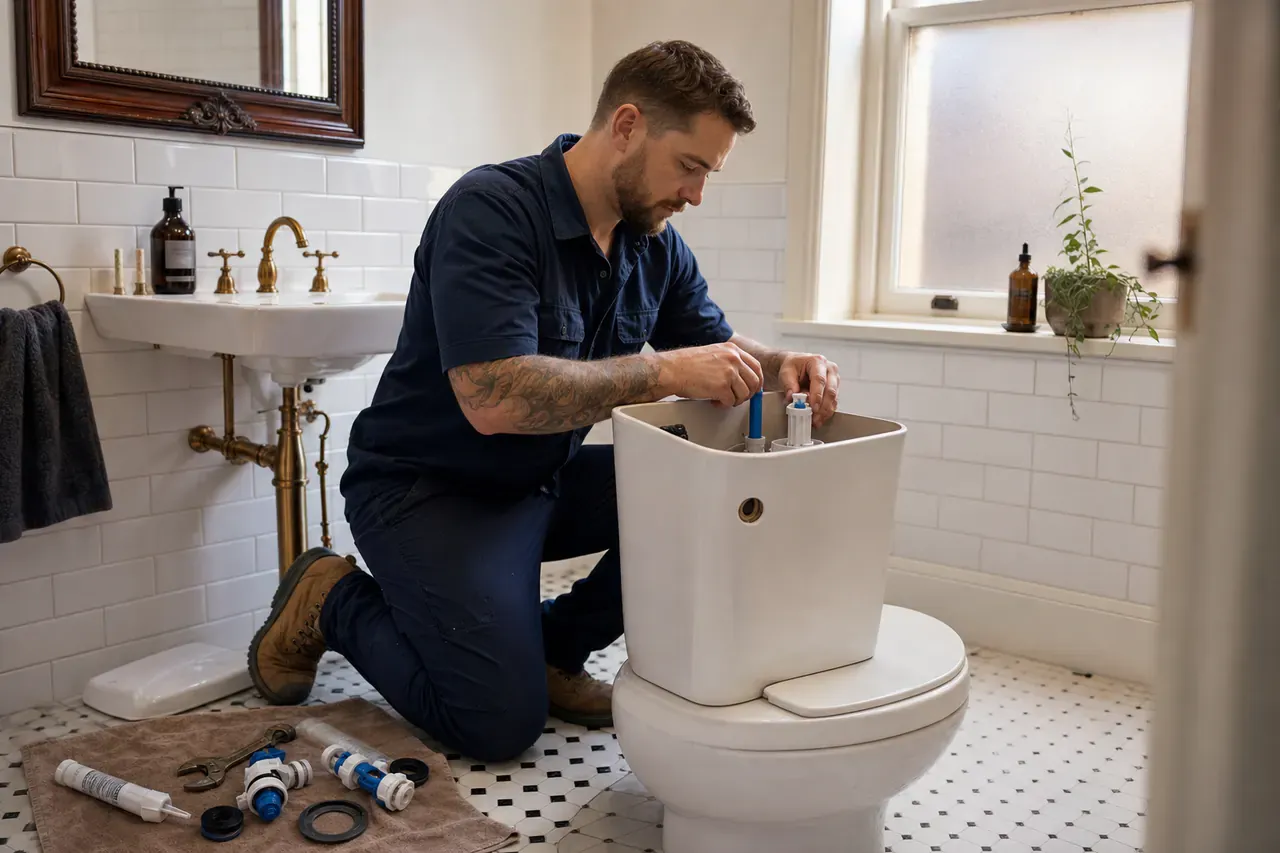
The bathroom has more plumbing in it than any other room in the house: hot and cold water to three or four fixtures, a drain under each one, and all of it hidden behind tiles. When something fails, it is usually small — a hose, a seal, a tap cartridge — but the water it lets out can do a great deal of damage before anyone notices.
A bathroom plumber in Sydney spends most of the day on five things: toilets that run or block, taps that drip, showers that leak, drains that will not empty, and leaks nobody can find. This page covers each of them, what they cost, and how to tell an emergency from a job that can wait until morning.
What a bathroom plumber fixes
- Toilets. Cisterns that keep filling, weak flushes, leaks at the base and blocked traps. Our emergency toilet repair page goes into the detail.
- Taps and mixers. Drips, stiff handles, low flow and mixers that will not shut off. Most are a worn washer or cartridge; an old tap body that has corroded is replaced.
- Showers and baths. Leaking shower heads and arms, taps that leak inside the wall, and wastes that have come loose under a bath.
- Basins and vanities. Leaking traps, blocked wastes and the flexible hoses that connect the taps.
- Floor wastes. The grated drain in the floor, which blocks with hair and soap and smells when its water seal dries out.
- Hidden leaks. Pipes inside walls and under floors, found by pressure testing rather than guesswork.
Bathroom leaks: finding where the water really comes from
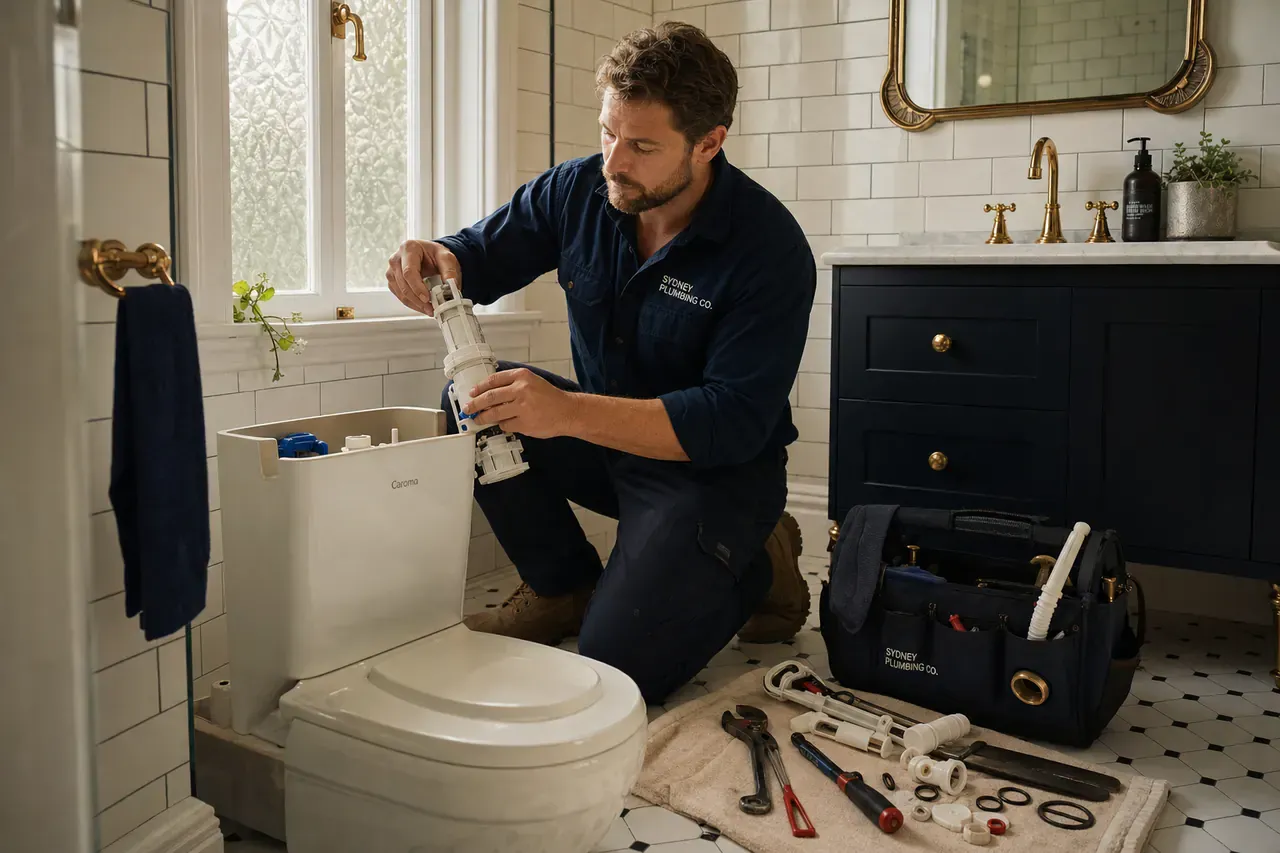
Water rarely shows up where it escapes. It runs along a pipe, a joist or the top of a ceiling until it finds a low point, so the stain in the room below can be a metre or more from the leak. That is why a good bathroom plumber tests before opening anything.
The usual suspects, in the order they are checked:
- Flexible hoses under the basin and behind the toilet. They are the most common cause of a suddenly flooded bathroom, and they give little warning.
- The toilet seal, where the pan meets the floor. A failed seal leaks a little with every flush.
- Tap bodies inside the shower wall. A worn seal lets water run down inside the wall every time the shower is used.
- The shower or bath waste, where the drain joins the pipe below.
- The pipes themselves. A pressure test shows whether the supply pipes are losing water when every tap is closed.
If all of that holds, the water is coming through the tiles and the waterproofing underneath. That is not a plumbing fault, and we will say so: it needs a licensed waterproofer. Testing first is what stops a shower being ripped out for the sake of a ten-dollar seal.
Blocked showers, basins and floor wastes
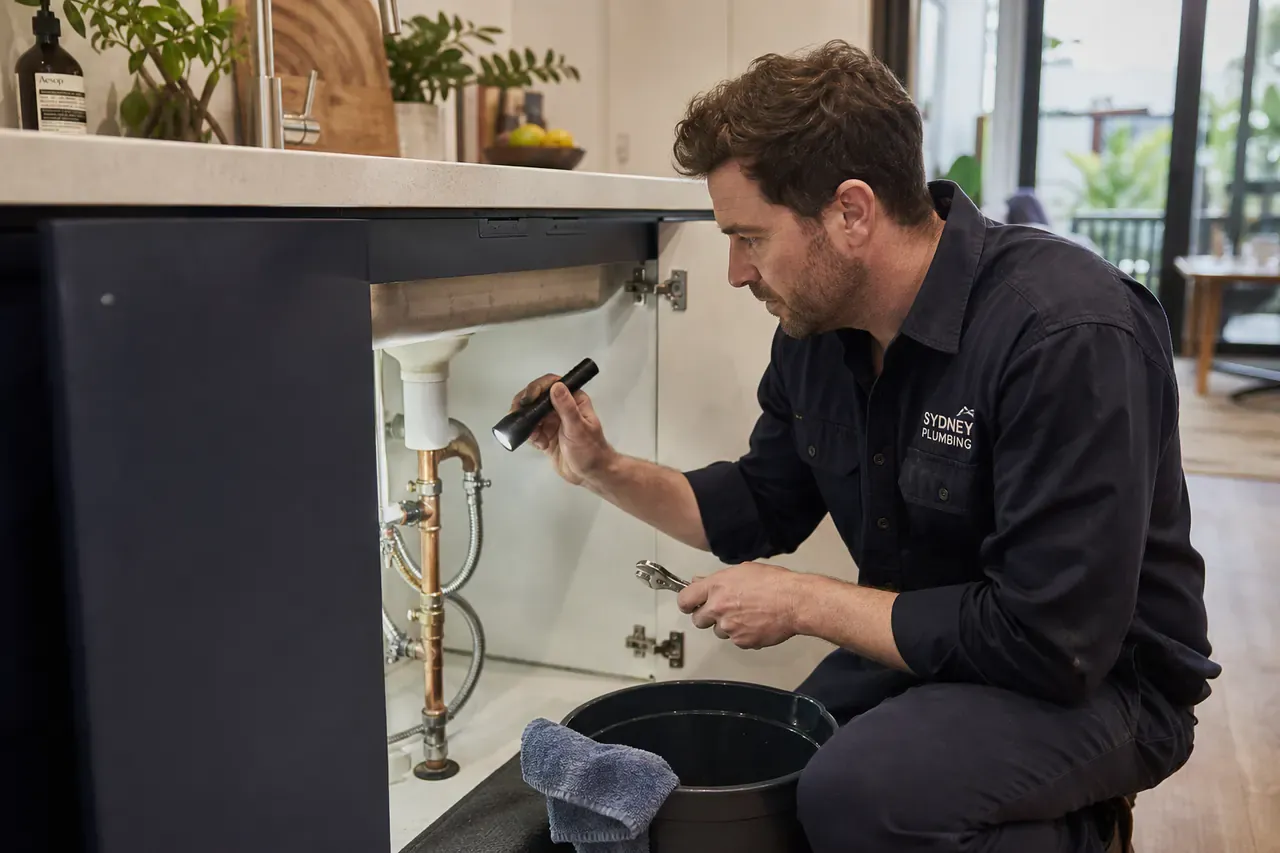
Hair and soap do most of it. They bind into a plug just below the grate, the shower starts to pool around your feet, and one day it stops draining altogether. A single slow fixture is nearly always a local blockage, cleared from the bathroom in a short visit.
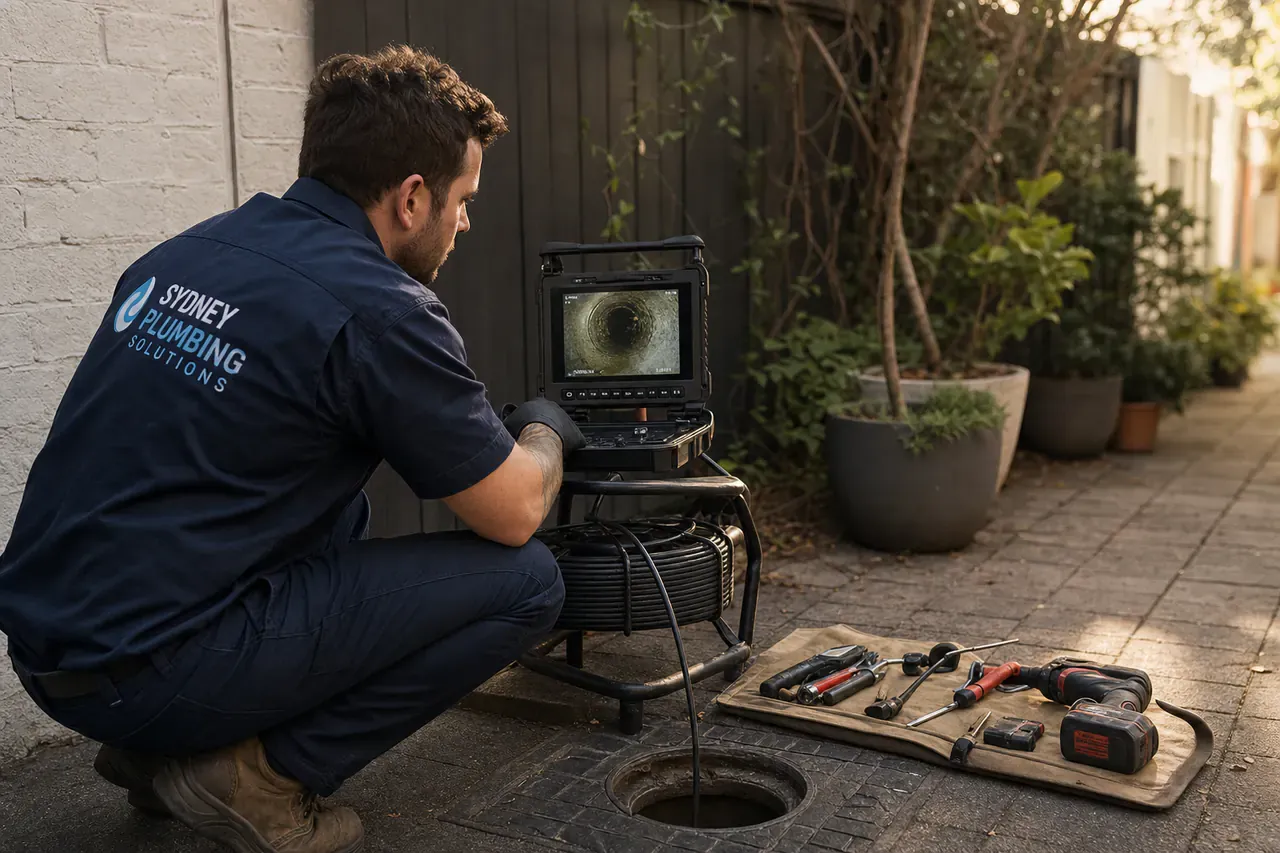
It is a different job when more than one fixture is affected. If the shower gurgles when the toilet is flushed, or the floor waste fills when the basin empties, the blockage is further down in the sewer line, and clearing the bathroom trap will not fix it. Stop running water and call before it backs up onto the floor.
Bathrooms in Sydney’s older homes and apartments
Terraces and Federation houses. Many bathrooms in the Inner West and Eastern Suburbs were added or rebuilt decades after the house was built, and the pipes behind the tiles can be a mix of old galvanised steel, copper and newer plastic. A repair in one spot often shows that the pipe next to it is near the end of its life too. Our guide to plumbing problems in old Sydney homes explains what to expect.
Apartments. Every unit has its own shut-off tap, usually in the laundry, the bathroom or the hot water cupboard. Find it before you need it. As a general rule in NSW, pipes inside shared walls and floors belong to the owners corporation and the fittings inside your bathroom are yours, so a leak into the unit below can involve the strata manager as well as the plumber. We give you an itemised invoice and photos for both.
Renovating a bathroom: what the plumber does, and when
A bathroom renovation needs the plumber twice. The first visit, before any tiling, sets the pipes and drains in their new positions. The second, after the tiling, fits the toilet, taps, basin and shower. Plumbing and drainage work in NSW has to be done by a licence holder, and you can check any plumber’s licence with NSW Fair Trading before work starts.
Two things save money on a renovation. Keep the toilet and the shower drain where they are if you can: moving a drain means cutting the floor. And buy fittings that carry the WaterMark, the certification scheme run by the Australian Building Codes Board. A licensed plumber cannot legally install a tap or toilet without it.
What you can do before the plumber arrives
- Turn off the fixture. There is a small tap on the wall behind the toilet and, usually, under the basin. Clockwise closes it.
- Turn off the bathroom or the whole home if you cannot find the fixture’s tap. Our guide shows where the water shut-off is in a house, a terrace and a unit.
- Keep water away from power. If it is near a light or a power point, switch that circuit off at the switchboard, but only if you can reach it safely.
- Take photos of the damage before you clean up. An insurer will ask for them.
A burst hose or water through a ceiling is an emergency at any hour. A dripping tap or a slow drain is not, and it can be booked for a daytime visit.