
How we fix it
About this service in Sydney
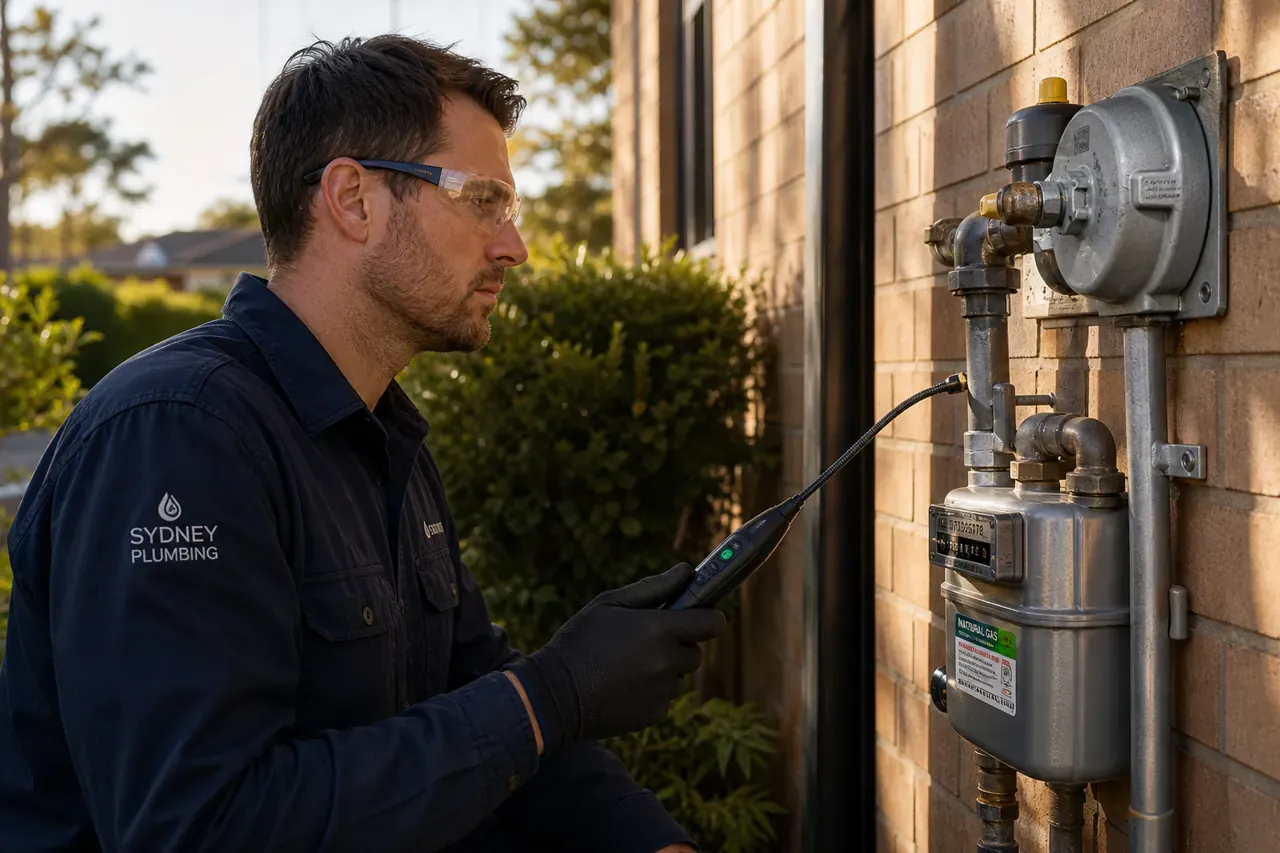
Roughly half the “plumber” searches we see from Sydney households are actually gas jobs: a cooktop that needs connecting, a hot water system changing from electric to gas, a heater point for winter, a BBQ line for summer. Different intent to a burst pipe — but legally, a world apart. In NSW, gasfitting is its own licence, and hiring someone without it isn’t a paperwork technicality; it voids appliance warranties, complicates insurance, and risks the one utility in your home that can explode.
This page covers planned gas fitting work. If you can smell gas right now, stop reading and follow the emergency steps on our gas leak emergency page.
What a licensed gas plumber actually does
Everything downstream of the gas meter is gasfitter territory:
- Appliance connections — cooktops, ovens, ducted and space heaters, continuous-flow hot water units, dryers
- New gas points and line extensions — extra bayonet points, outdoor kitchens, plumbed natural gas BBQs
- System upgrades — resizing supply lines when new appliances push the gas load beyond what the original pipework was sized for
- Conversions — electric-to-gas hot water, LPG-to-natural-gas when the street main finally reaches your block
- Safety inspections and compliance — annual appliance checks, pre-purchase inspections, certificates for past uncertified work
Everything upstream of the meter — the street main, the service line, the meter itself — belongs to Jemena, Sydney’s gas network operator. We coordinate with them whenever a job touches both sides, which happens more often than you’d think: meter relocations during renovations, supply upgrades for big appliance loads, new connections on blocks where gas has just arrived.
The jobs Sydney calls us for most
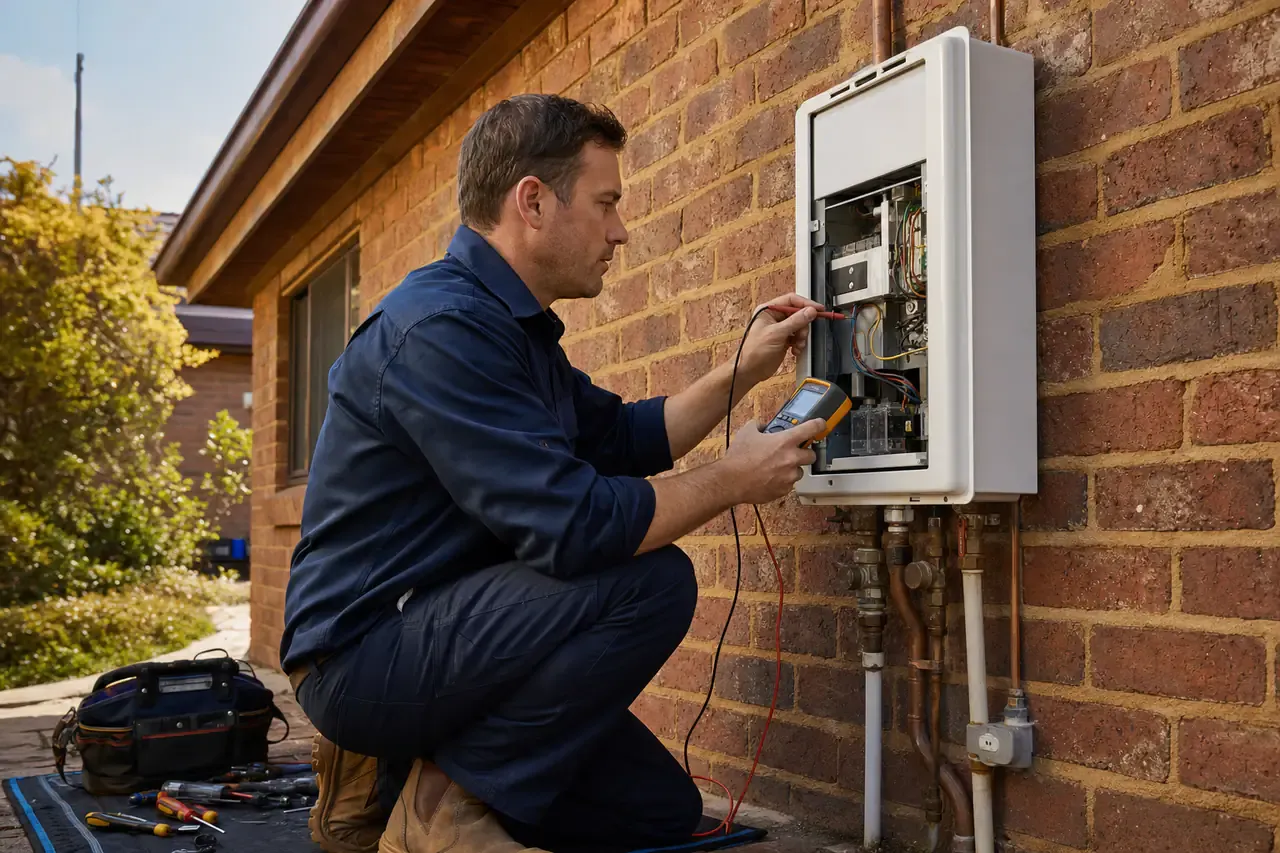
Kitchen renovations. The cooktop moves 2 metres, and suddenly the gas point needs to move too — with the line re-run behind new cabinetry before the stone benchtop goes in. Sequencing matters here: we do rough-in before the cabinetmaker and final connection after. Common across the Inner West and North Shore renovation belt.
Electric-to-gas hot water conversions. The old electric storage tank dies, the quarterly power bill has been climbing for years, and the house already has gas for the cooktop. Running a new line to the hot water position and hanging a continuous-flow unit is usually a one-day job — see our emergency hot water page for the repair-vs-replace maths.
Heater points. Sydney’s older housing stock — the art deco blocks of Potts Point, the Federation semis of Marrickville — was never insulated to modern standards, and come June the calls stack up for plumbed gas heater bayonets. A single point off an adequately sized line is a same-week, few-hundred-dollar job.
Outdoor kitchens and BBQ lines. Plumbed natural gas means never swapping a bottle mid-barbecue again. Big in the Shire — Sylvania and the canal-estate streets around it run a strong outdoor-kitchen culture — and increasingly standard in Hills District new builds.
Strata and apartment work. High-rise gas work has its own rules: riser capacity calculations, building-manager coordination, common property versus lot pipework. Around North Sydney and the CBD fringe, most of our gas jobs run through a strata manager at some point.
Why the licence matters (and how to check it)
Under the Gas and Electricity (Consumer Safety) Act 2017, any work on gas pipework or appliance connections in NSW must be done by a licensed gasfitter. The consequences of unlicensed work are concrete:
- No Certificate of Compliance — which insurers routinely request on claims involving gas appliances
- Voided manufacturer warranty on the appliance
- Failed building inspections when you sell
- The safety issue itself — undersized lines, unapproved joint compounds and untested connections are how slow leaks start
Any legitimate gas plumber will quote their licence number on the quote and the invoice, and the NSW Fair Trading register confirms it. You can verify it in about a minute — our guide on checking a NSW tradesperson’s licence walks through the Fair Trading lookup step by step.
How we price gas fitting work
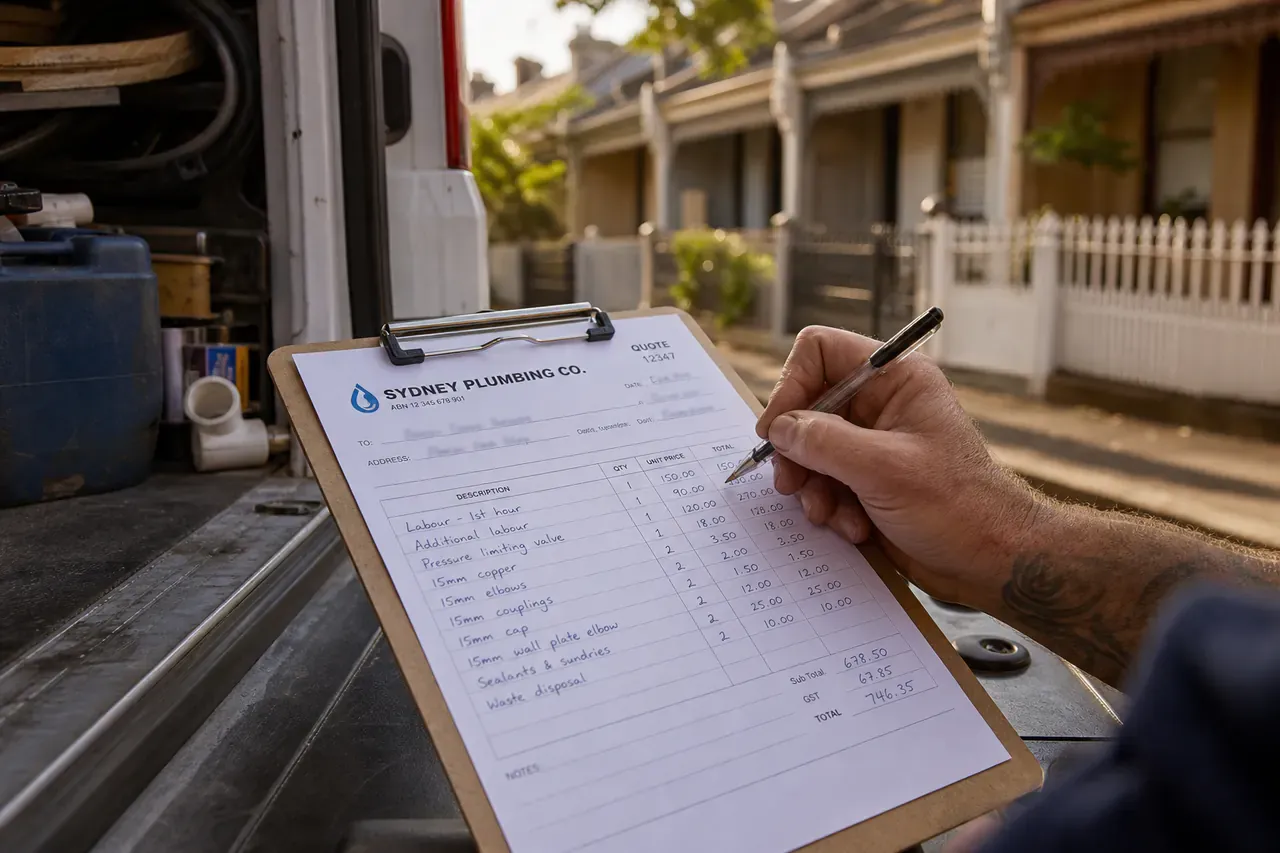
Planned gas work is quoted fixed-price, in writing, before anything starts — it’s not emergency work, so there’s no reason for hourly open-endedness. The quote covers:
- Materials — certified pipe, fittings and joint compound rated for the gas type (natural gas and LPG take different components)
- Labour — including the pressure testing and certification time, not just the wrench time
- The compliance certificate — never an “extra”
- Gas load calculation where new appliances are involved — this is the step cut-price operators skip, and it’s why their cooktop connections starve when the heater and hot water run at once
If groundwork is involved (buried lines to an outdoor kitchen, for example), trenching and reinstatement are itemised separately so you can compare quotes fairly or do the digging yourself. Lodge a free enquiry with Before You Dig Australia first.
Planned today beats emergency tomorrow
A decent share of the emergency calls on our gas leak page trace back to gas fitting that was done cheap, uncertified, or decades ago and never inspected since. Corroded regulators, perished flexible connectors from 1990s installs, undersized lines running over capacity — all detectable at an annual inspection for less than $300, all considerably more expensive at 2am with the house evacuated.
If your gas appliances haven’t been looked at since you moved in, book the inspection with the next planned job — same visit, and the certificate covers the lot.